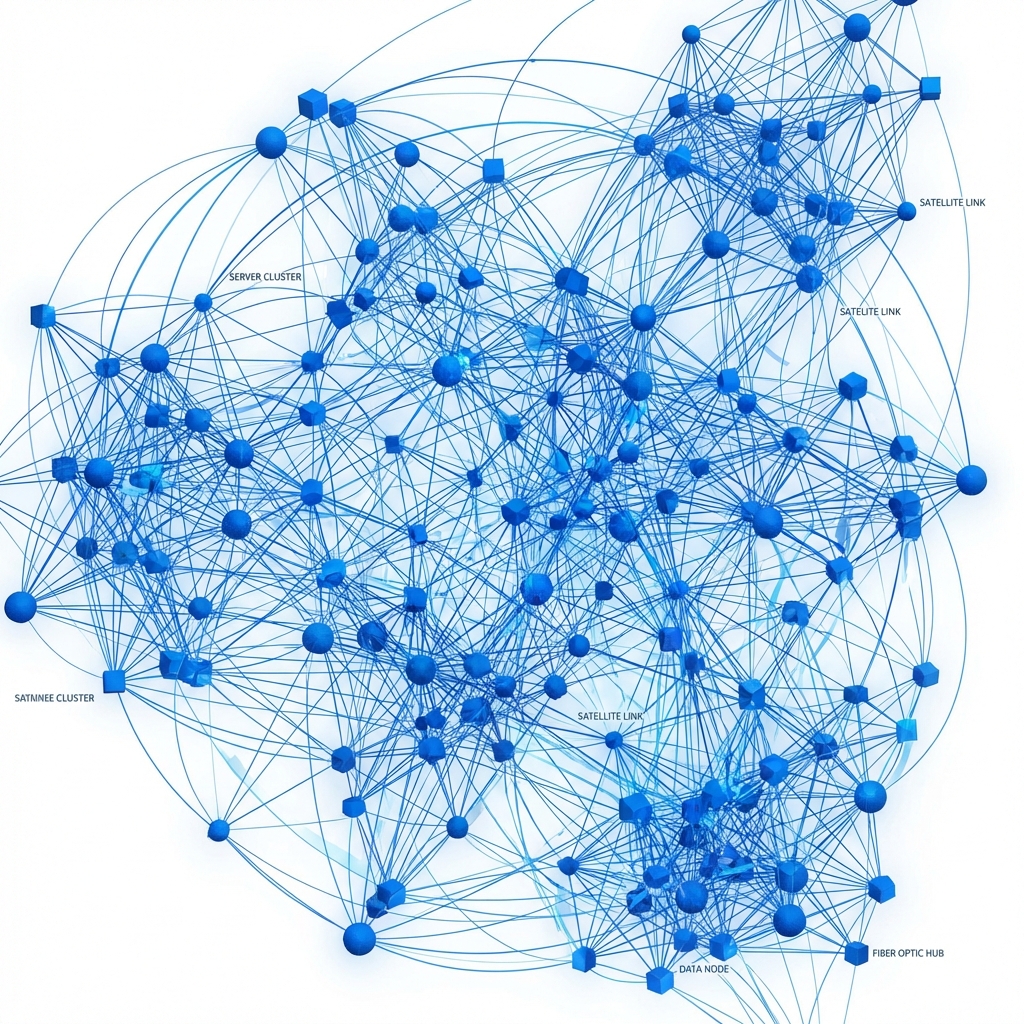
So you put your app in a Docker container. Great. Now you need to run 50 copies of it across 10 servers. And they need to talk to each other. And if one crashes, it needs to restart. This is Orchestration, and Kubernetes (K8s) is the king.
The Architecture
Kubernetes is a cluster—a group of computers working as one.
- Control Plane (Master): The brain. It makes decisions (e.g., "Schedule this pod on Node 3").
- Nodes (Workers): The muscle. These are the servers that actually run your containers.
Unpacking the Terms
- Pod: The atom of K8s. It usually contains one container. K8s doesn't run containers deeply; it runs Pods.
- Deployment: The manager. You tell it "I want 3 replicas of this Pod." It ensures 3 are always running. If a node dies, it moves the pods to a healthy node.
- Service: The phone number. Pods suffer death and rebirth; their IPs change. A Service gives a stable IP to a group of Pods so other apps can find them.
Why it's Complex
K8s solves Google-scale problems. For a simple blog, it's overkill. But for a microservices architecture with hundreds of moving parts, it provides the automation necessary to keep the system alive at 3 AM.
KubernetesK8sOrchestration
Share: