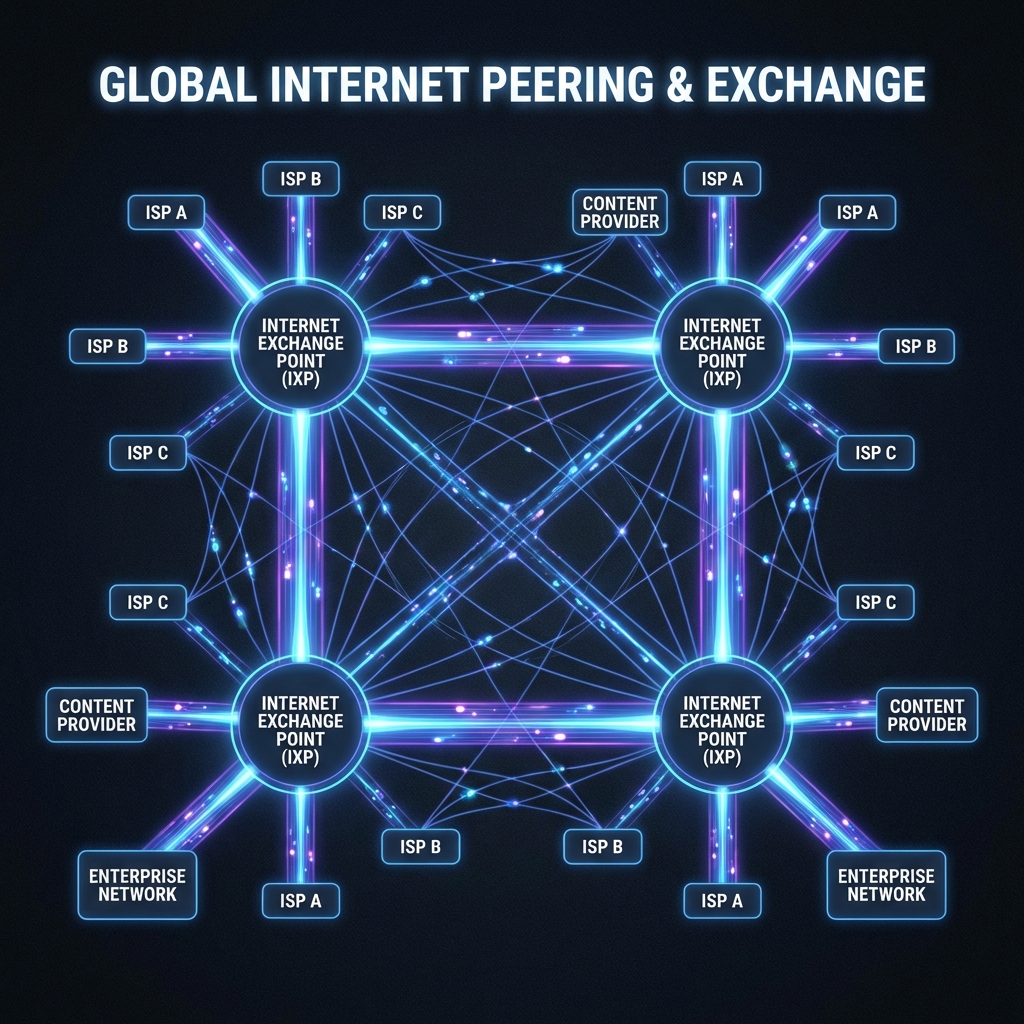
Internet connectivity is rarely a single pipe. Understanding the difference between transit and peering—and when each makes sense—helps ISPs optimize both costs and performance.
Transit Relationships
Transit providers sell access to the entire internet. Your customers can reach any destination because your transit provider maintains routes everywhere. Payment flows in one direction—you pay them.
Transit is essential for reaching the global internet. Most ISPs require at least one transit relationship, often two or more for redundancy. Transit pricing depends on committed capacity, with per-megabit costs declining at higher volumes.
The quality of transit matters. Providers with extensive peering themselves offer better paths to popular destinations. Cheap transit often means longer paths and more congestion.
Peering Relationships
Peering exchanges traffic between networks without payment. Both parties benefit from direct connectivity—shorter paths, reduced transit costs, better performance. Peering is typically settlement-free; neither party pays the other.
Peering can be private (direct connections between two networks) or public (through Internet Exchange Points where many networks connect). IXPs multiply peering opportunities efficiently; a single port enables peering with dozens of networks.
Economic Considerations
Every bit delivered via peering is a bit not charged by transit providers. As your traffic grows, peering investments yield increasing returns. The breakeven analysis compares IXP port costs and cross-connect fees against transit rates.
Content providers—Google, Netflix, Meta—often offer free peering or even pay ISPs to host cache nodes. This content represents significant traffic percentages; direct access dramatically reduces transit requirements.
Performance Benefits
Peering typically provides lower latency than transit. Fewer router hops mean faster round trips. For latency-sensitive applications like gaming and video calls, peering improvements directly enhance customer experience.
Strategic Approach
Start with transit for global reach. Add IXP presence when traffic volumes justify the investment. Pursue content provider caches and peering arrangements progressively. The goal is shifting traffic from paid transit to direct relationships wherever economically justified.