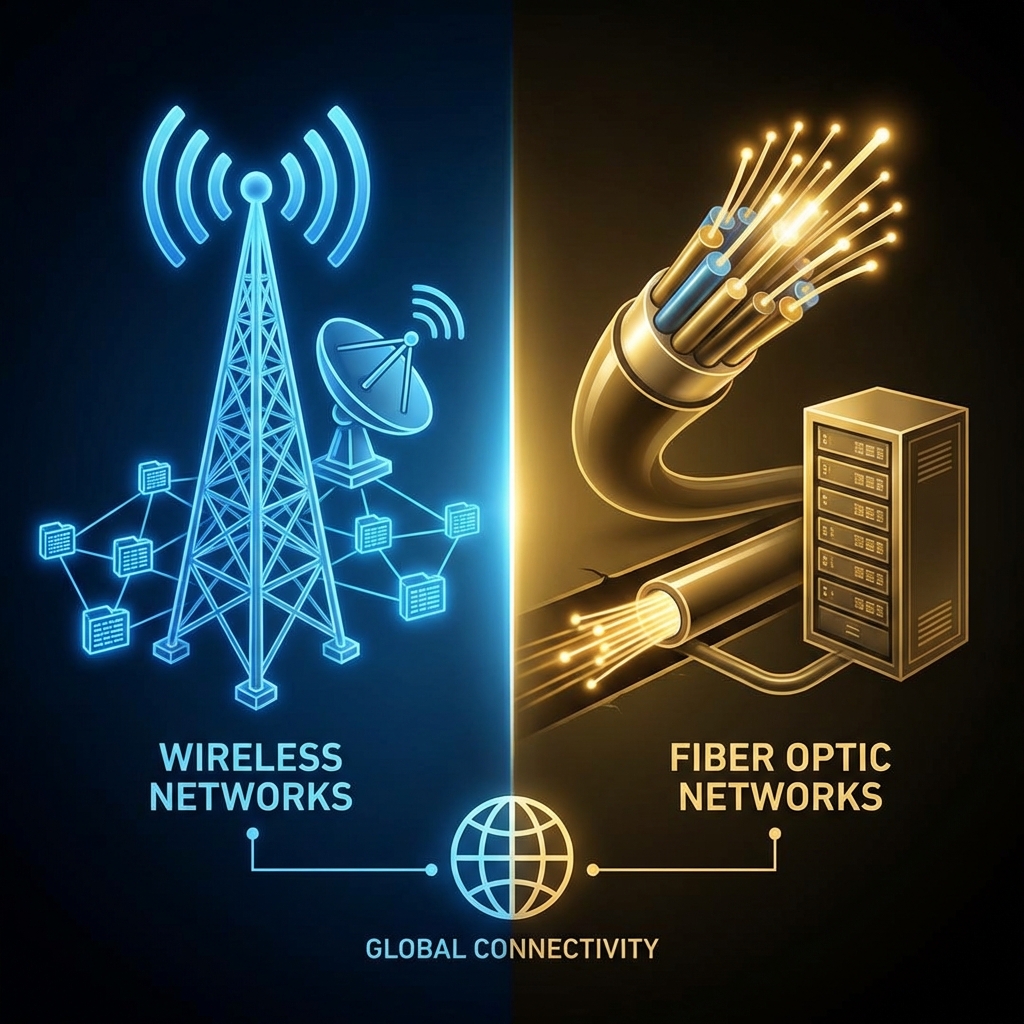
Last-mile technology choice shapes an ISP's operational reality for decades. Both fiber and wireless approaches have legitimate applications; the right choice depends on specific circumstances rather than absolute superiority.
Fiber Advantages
Fiber delivers unmatched capacity. Current residential deployments offer gigabit speeds; the underlying infrastructure can support 10 Gbps and beyond with equipment upgrades. Future-proofing doesn't get better than glass.
Reliability stems from fiber's immunity to electromagnetic interference, weather effects, and signal degradation over distance. Once installed, fiber maintains consistent performance with minimal maintenance for 25+ years.
Symmetric bandwidth suits modern usage patterns—cloud backups, video conferencing, and content creation all demand upload capacity that fiber delivers naturally.
Fiber Challenges
Construction costs dominate fiber economics. Trenching, boring, and permitting in established areas run Rs 30,000-80,000 per served premises in urban India. Rural deployments cost more. These upfront investments require long payback periods.
Deployment timelines stretch months or years for meaningful coverage. Permits, right-of-way negotiations, and physical construction proceed slowly. Markets with aggressive competitors may not wait.
Wireless Advantages
Fixed wireless deployments happen in weeks, not years. Tower construction and equipment installation complete quickly. Customers connect within days of infrastructure reaching their area.
Capital efficiency suits limited funding. A single tower serves many customers; costs spread across the coverage area rather than accumulating per premises.
Wireless Challenges
Wireless capacity is shared and finite. Spectrum constraints limit total throughput; each additional customer reduces available bandwidth per user. Heavy usage areas may experience congestion that fiber would handle effortlessly.
Line-of-sight requirements complicate deployments in wooded or hilly terrain. Building penetration, weather interference, and distance limitations constrain coverage.
Hybrid Approaches
Most successful ISPs deploy both technologies strategically. Fiber serves high-value areas—business districts, dense housing—where economics justify construction. Wireless extends reach to lower-density areas where fiber payback periods stretch unacceptably long.