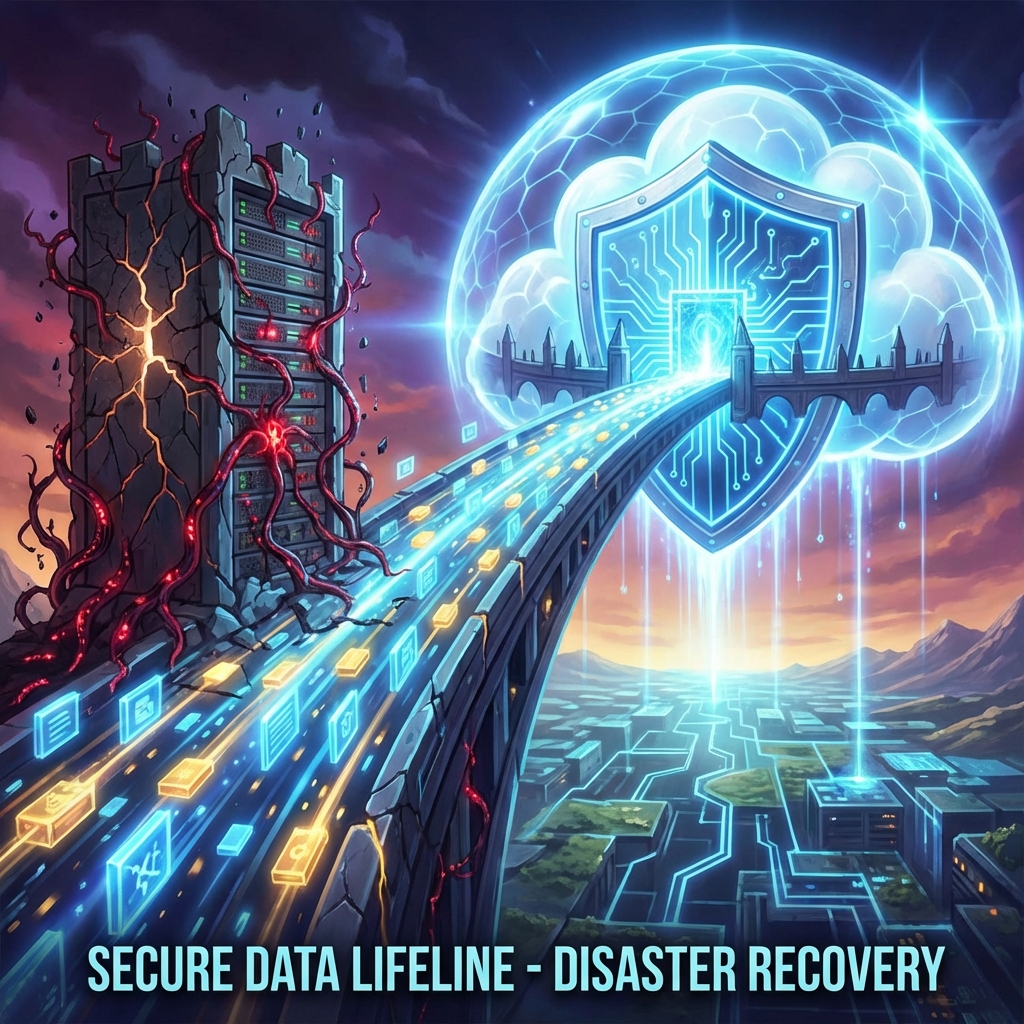
In technology, it's not a question of if something will fail, but when. A robust Disaster Recovery (DR) plan is the difference between a minor hiccup and a business-ending catastrophe.
Defining Recovery Objectives
Two metrics frame disaster recovery planning: Recovery Point Objective (RPO) and Recovery Time Objective (RTO). RPO defines acceptable data loss—how much time between your last backup and the disaster occurred. RTO defines acceptable downtime—how quickly systems must be operational again.
These objectives have direct cost implications. Zero RPO (no data loss) requires synchronous replication, which is expensive. Near-zero RTO requires standby systems ready for immediate failover. Most organizations balance cost against risk, accepting some exposure for reduced investment.
Beyond Backup
Traditional backup strategies focus on data protection, but complete disaster recovery encompasses systems, applications, configurations, and documentation. Can your team rebuild a complete server environment from backups alone? If critical configuration exists only in an administrator's memory, you don't have a recovery plan—you have a liability.
Infrastructure as Code approaches document system configurations in version-controlled repositories. When disaster destroys infrastructure, these templates enable rapid reconstruction. Container orchestration platforms like Kubernetes can redeploy entire application stacks from declarative specifications.
Testing: The Critical Step
An untested disaster recovery plan is merely theoretical. Regular testing validates that backups are recoverable, procedures are accurate, and teams can execute under pressure. Testing reveals gaps—missing documentation, changed dependencies, incorrect assumptions—that would otherwise surface only during actual emergencies.
Testing approaches range from tabletop exercises discussing theoretical scenarios to full failover tests that actually switch production to recovery infrastructure. Even partial testing, like recovering a single server from backup, provides valuable validation.
Geographic Considerations
Local disasters—fires, floods, power grid failures—can destroy both primary and backup infrastructure if co-located. Geographic distribution of recovery resources protects against regional events. Cloud services simplify geographic distribution, but require careful consideration of data sovereignty and network performance.
Disaster recovery planning isn't a one-time project. As systems evolve, recovery plans must be updated and tested again. The investment in ongoing DR maintenance pales compared to the cost of discovering inadequate plans during an actual disaster.